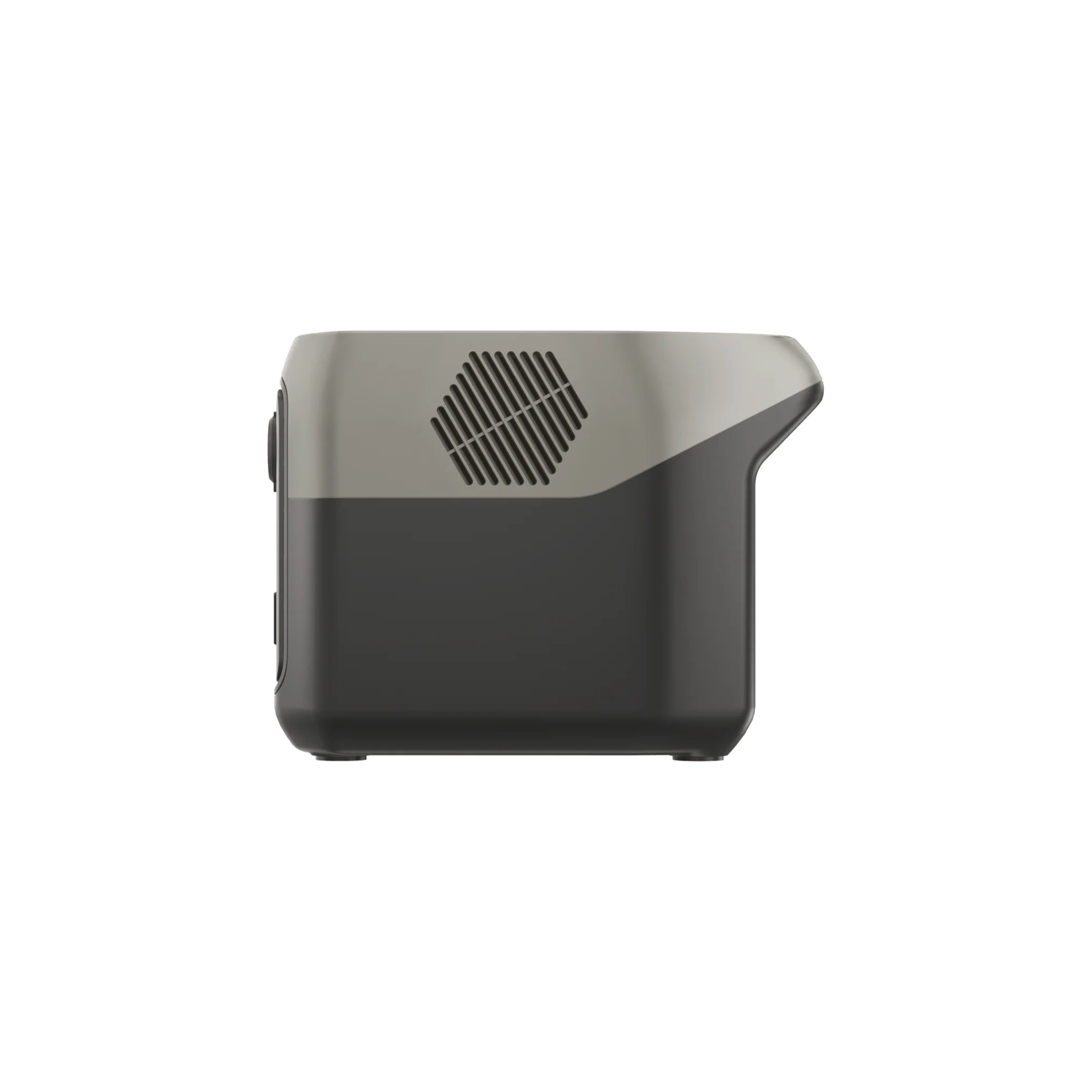
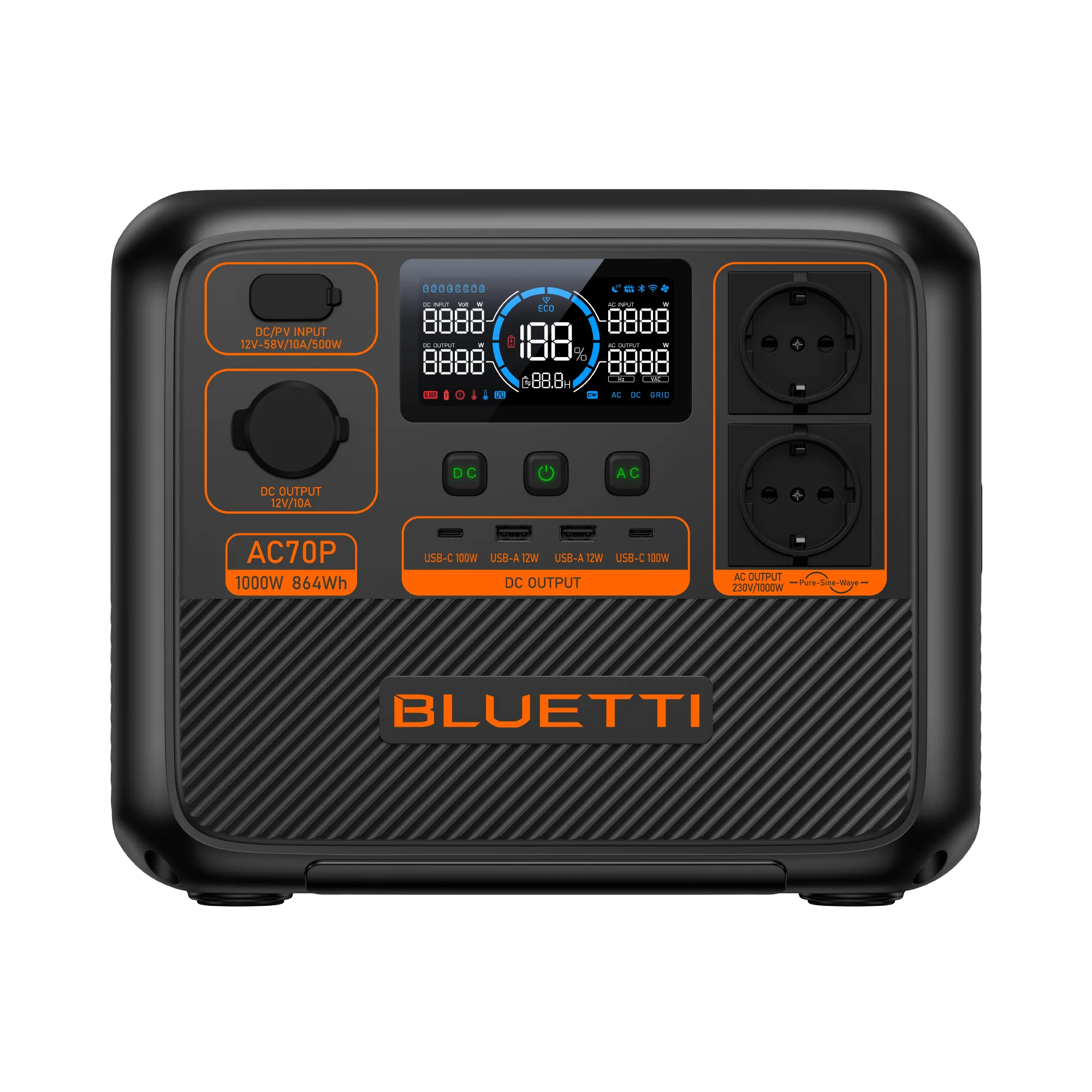
EcoFlow EcoFlow RIVER 2 Max
JouleSpecs does not sell and does not show shop prices: check the price where you buy.
Where to buy
Check the price on AmazonPaid link: the price for you does not change.
As an Amazon Associate I earn from qualifying purchases.
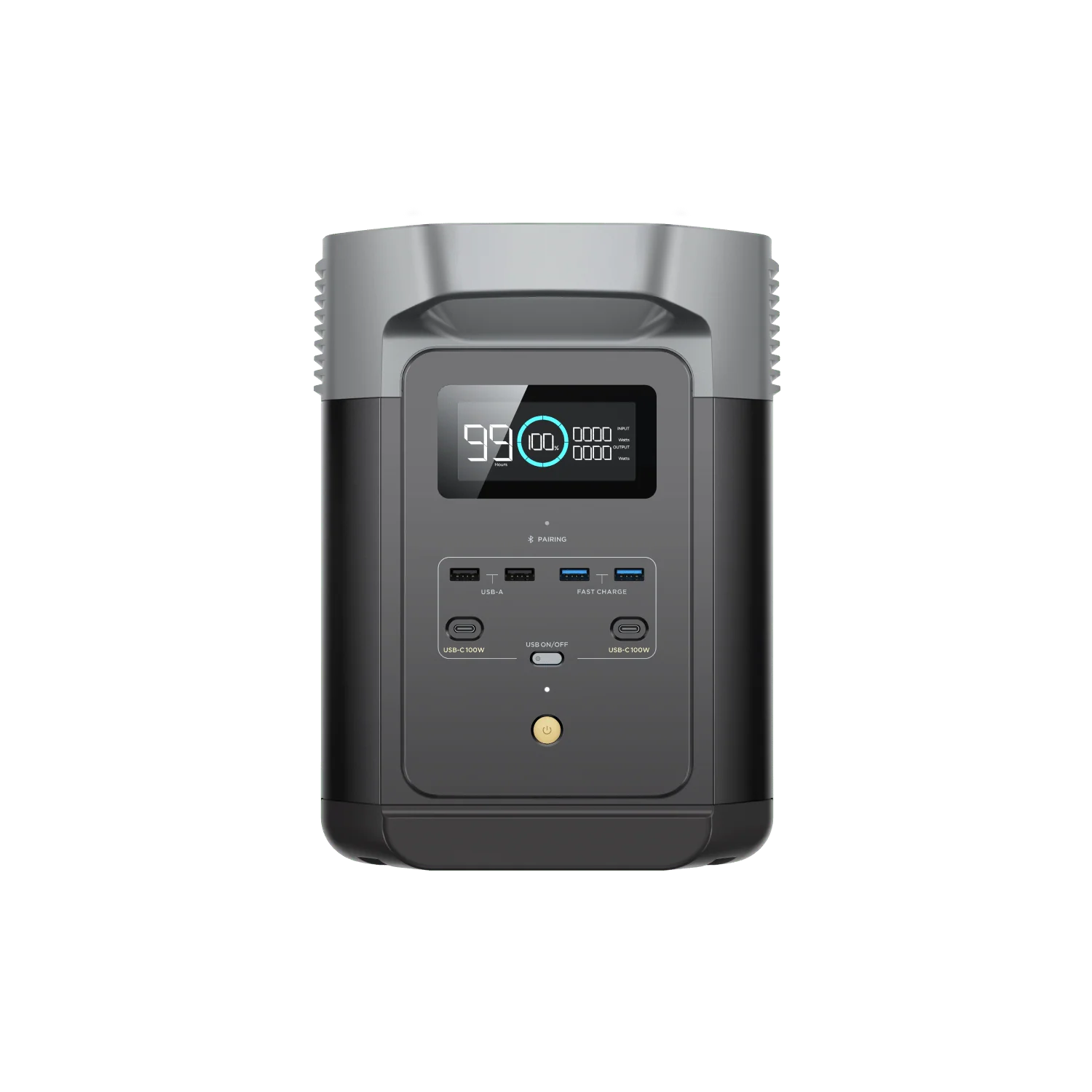
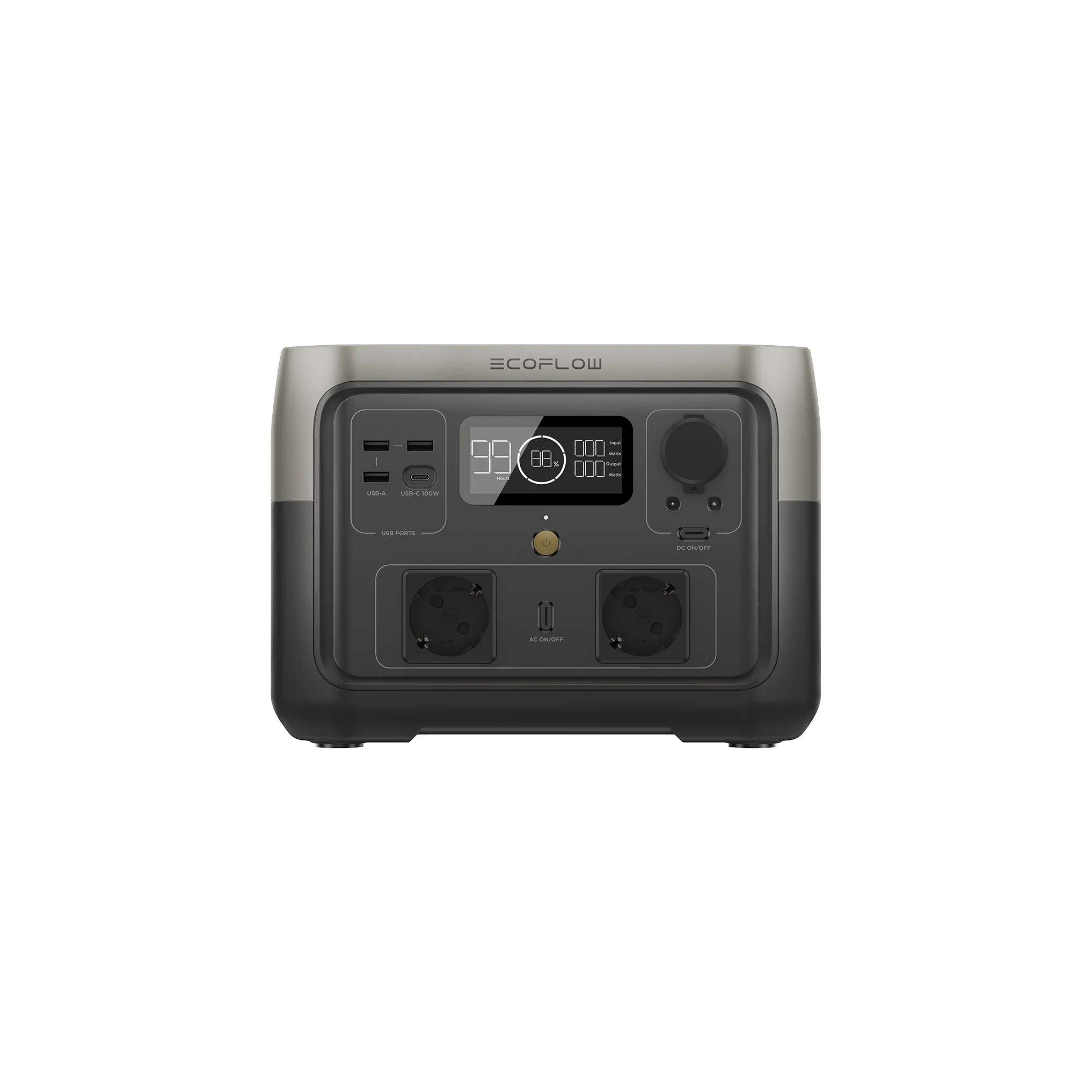
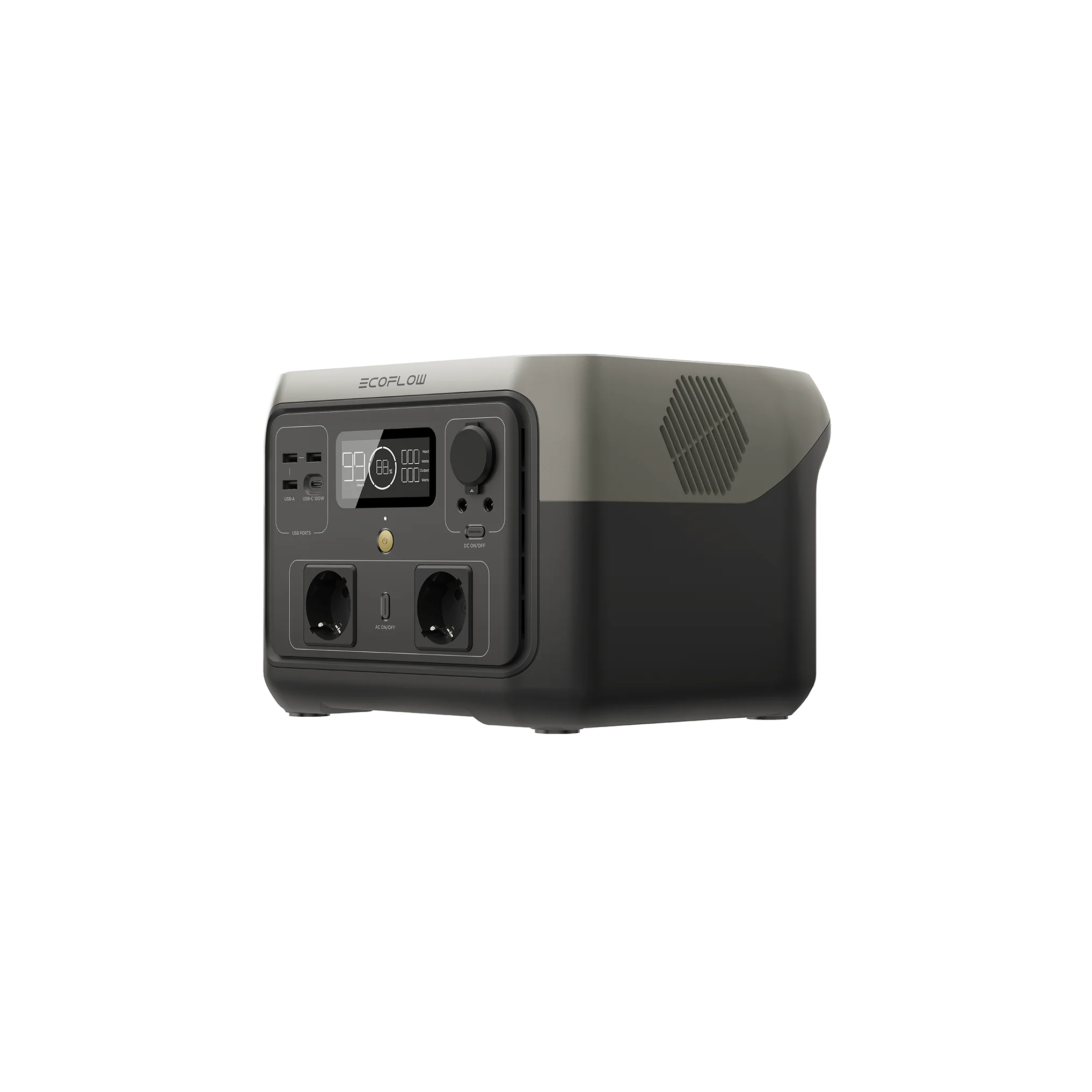
EcoFlow RIVER 2 Max is a lithium iron phosphate power station that sits on a desk or fits in a backpack: just over six kilos, it moves with one hand. The output peak is double the continuous power, the margin a compressor or a motor-driven tool needs to start without tripping the protection.
When the grid fails it switches to the battery fast enough that a connected computer doesn't turn off, but it isn't zero: anyone with equipment that can't tolerate even an instant needs something else. It charges from the outlet, the sun, the car's cigarette lighter socket or USB-C, and from the grid it fills up in an hour — provided it has an outlet of its own, not a shared power strip.
The display shows how many watts go in and out without going through the phone; the app is for checking on it from a distance. It's the right size for anyone traveling by van, going camping or wanting a light reserve to carry around every day, not for anyone who has to carry a home through a long outage.
Technical specifications
official manufacturer list price — on nominal capacity
| Parameter | Value | Source |
|---|---|---|
| Weight | 6.1 kg (13.4 lb) | manufacturer website |
| Power supply | 220-240 V / 50-60 Hz | manufacturer website |
| Nominal capacity | 0.512 kWh | Declared by the brand |
| Cell chemistry | LFP (lithium iron phosphate) | Declared by the brand |
| Continuous output | 500 W | Declared by the brand |
| Peak output | 1000 W | Declared by the brand |
| Fastest USB-C | 100 W | Declared by the brand |
| Maximum charge power | 0.66 kW | Declared by the brand |
| Maximum solar input | 220 W | Declared by the brand |
| Backup power | EPS (brief interruption) | Declared by the brand |
| Switchover time | 30 ms | Declared by the brand |
| Rated cycles | 3000 cicli | Declared by the brand |
| Capacity at end of cycle life | 80 % | Declared by the brand |
| Warranty | 5 anni | Declared by the brand |
| Mounting | Portable | Declared by the brand |
| Minimum temperature | -10 °C | Declared by the brand |
| Maximum temperature | 45 °C | Declared by the brand |
| Official list price | 399 € | Declared by the brand |
| Usable capacity | — | Not declared |
| Depth of discharge | — | Not declared |
| Cell supplier | — | Not declared |
| Expandable | — | Not declared |
| Maximum expanded capacity | — | Not declared |
| Peak duration | — | Not declared |
| AC outlets | — | Not declared |
| 0–80% charge time | — | Not declared |
| Guaranteed throughput | — | Not declared |
| Guaranteed remaining capacity | — | Not declared |
| Round-trip efficiency | — | Not declared |
| Standby consumption | — | Not declared |
| Ingress protection | — | Not declared |
| Cell heating | — | Not declared |
| Noise level | — | Not declared |
| Wheels and handle | — | Not declared |
| Works without internet | — | Not declared |
| Local control | — | Not declared |
| Open protocols | — | Not declared |
| Home Assistant integration | — | Not declared |
| Where the data is hosted | — | Not declared |
| Remote updates | — | Not declared |
| App required for setup | — | Not declared |
| Declared standards | — | Not declared |
Which documents this page rests on
The rest of the data comes from 2 pages on the manufacturer's site, cited row by row in the table above.
A manual or a datasheet counts as a source even when the original file is hosted elsewhere: what matters is the document, not the server. Where that happens, it is stated above.
What it really costs
How we worked it out
- price
- 399
- nominal capacity
- 0.512
- the manufacturer does not state the guaranteed total energy throughput, which for heavy users is often the limit that runs out first
How we worked it out
- stated cycles
- 3000
- warranty years
- 1825
- the manufacturer does not state the guaranteed total energy throughput, which for heavy users is often the limit that runs out first
- on nominal capacity: the manufacturer does not state the usable figure, so the real cost is higher
- without conversion losses, which the manufacturer does not state: the real cost is higher
How we worked it out
- price
- 399
- nominal capacity
- 0.512
- battery life cycles
- 1825
- round-trip efficiency
- 100
- energy delivered over the whole life
- 934
- on nominal capacity: the manufacturer does not state the usable figure, so the true number is lower
How we worked it out
- nominal capacity
- 0.512
- weight
- 6.100
- on nominal capacity: the manufacturer does not state the usable figure, so the true number is lower
How we worked it out
- continuous power
- 500
- nominal capacity
- 0.512
These numbers are calculated, not stated: they have no source to cite, they have a formula you can redo. The price used is the manufacturer's list price, which is stable and the same in every country — not a shop's price on the day.
Pros and cons
In favour
- The output peak is double the continuous power: a compressor or a motor-driven tool starts without tripping the protection.
- When the grid fails, the connected computer doesn't turn off.
- The display shows how much goes in and out without needing the phone. source
- Coverage applies in full without having to register the product anywhere.
Worth knowing
- The peak handles one demanding appliance at a time: two together trip the overload protection.
- The switch to the battery isn't instant: for a server or a workstation that can't tolerate any interruption, it isn't enough.
- Fast charging from the grid needs a dedicated wall outlet: from a power strip it isn't guaranteed.
Similar products worth weighing up
Other products EcoFlow
Alternatives in the catalogue
Chosen by the declared use tier and footprint, not by price: we don't publish prices.